 Add to home screen
How Pip teaches
13 question types, one method each. Watch, try, practise, then a mock test.
Sorted by method, not by topic
13 question types. 13 methods. One owl.
- 1Ordering & Position▶ Who’s in the Middle?
- 2Truth & Lies▶ Who Knocked Over the Cake?
- 3Drawing Conclusions▶ The Sticker Rule
- 4Spotting Reasoning Errors▶ The Orange Juice Experiment
- 5Strengthening Arguments▶ Reading Time
- 6Weakening Arguments▶ The Breakfast Race
- 7Hidden Assumptions▶ The Front-Row Seat
- 8Matching Clues▶ Who Has the Rabbit?
- 9Rules & Procedures▶ The Cheapest Tickets
- 10Patterns▶ What Comes Next?
- 11Flat Shapes▶ The Paper Snowflake
- 123D Blocks▶ How Many Blocks?
- 13Analogies▶ Home Sweet Home
One method, four steps
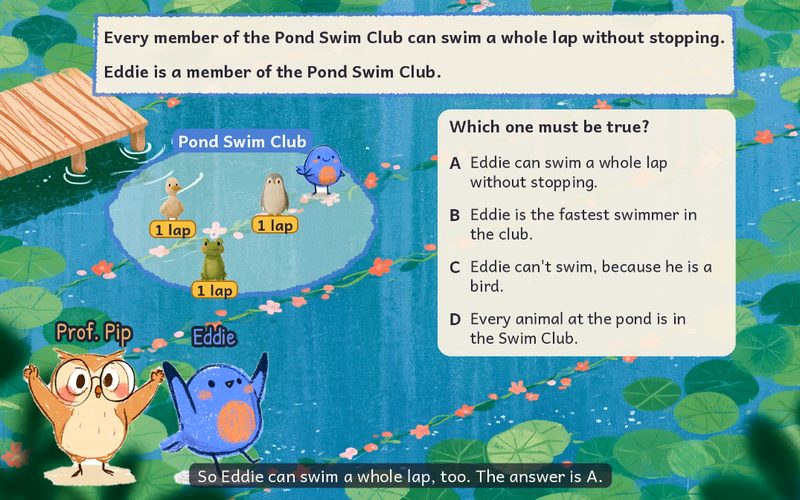
1 · Watch
One method in 2–3 minutes. The pictures move in step with the voice.
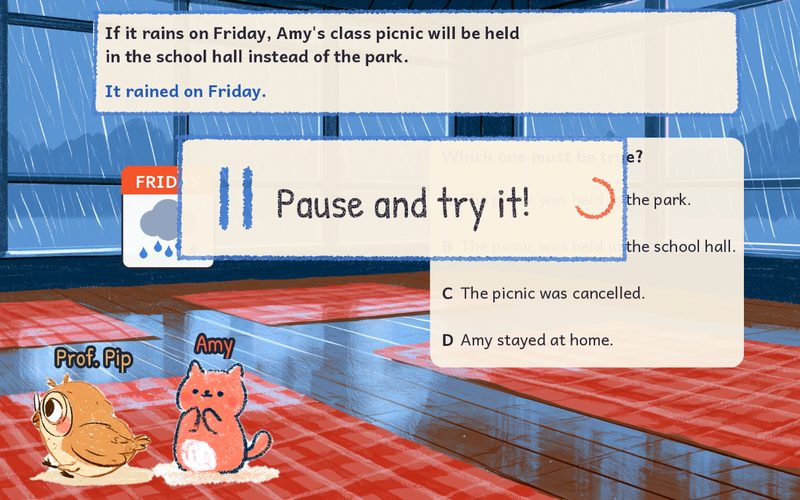
2 · Pause and try
Think first, then see the answer, the common traps and a quick way to check.
3 · Practise
Questions of the same type, from easy to hard. Every correct answer earns a gem.
4 · Mock test
30 questions in 30 minutes, with a report by question type.
For parents
See where to practise next
After a mock test, you get a short report: one line for each of the 13 question types, and the three to practise next. No marking, no guesswork.
- Each lesson and practice round adds to the picture
- The report suggests the matching Pip lessons
- One mock test is a first look, not a verdict
Mock test report
Practise next:
For your child
Practice that feels like play
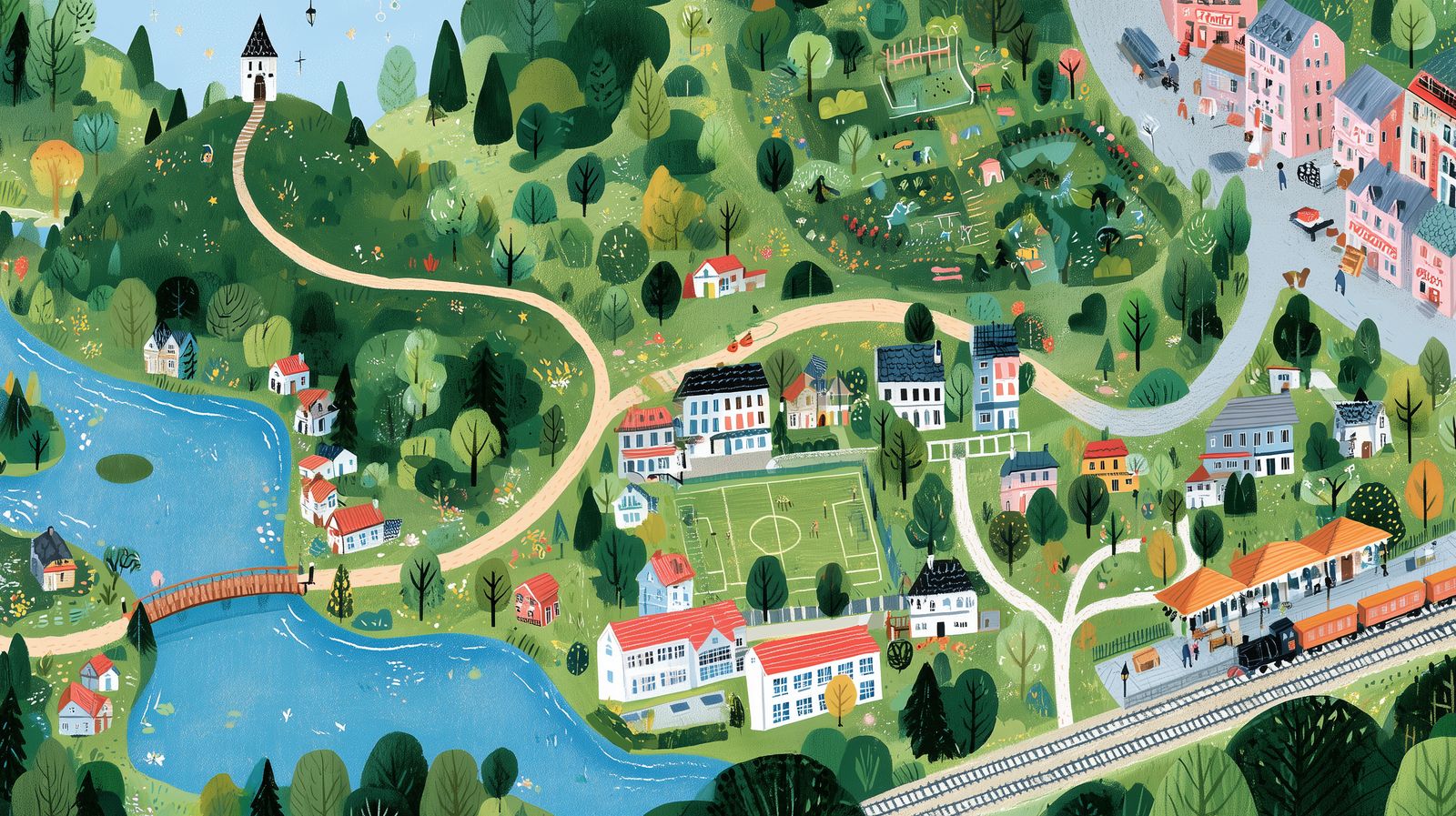
Your child explores Pip’s village, where 13 places match the 13 question types. Watch the lesson, then solve the questions. Every correct answer earns a gem, and one gem of each colour forges a magic treasure for their own treasure chest.
No ads and nothing to buy inside. Gems are earned, never bought.
No sign-up for the demo. Progress is saved only on your device.
Not just for test day
Skills that outlast the test
The test is one morning in May. The thinking stays.
Spot a weak argument
“Everyone says so” isn’t proof. Children learn to ask what the evidence really shows.
Reason step by step
Write down what you know, rule things out, then decide. The same habit helps in maths, science and writing.
See it in 3D
Turning, folding and flipping shapes in your head is a skill that grows with practice.
Check before you answer
Every lesson ends with a quick way to check. Careful beats fast.
Help us build it
Tell us what you think
Watched a free lesson or tried the village? We read every message, and we use them to make Pip better.
Ready to try?
Watch three lessons free, or get a free mock test for your child.